Evolve recurring security-campaign imagery toward a more premium, contemporary and distinctive visual language that feels campaign-ready.
Verisure Germany / Art Direction
Outdoor Security
Campaign Art Direction
Developing a visual direction around early detection: from the communication challenge and creative exploration to selection, refinement and campaign readiness.
This outdoor-security campaign is used as a representative example of a broader AI-assisted workflow applied across recurring campaign production.
“
AI is not the art director. It generates possibilities; creative direction remains human.
01
Brief &
creative objective.
Every campaign starts with a communication problem — not with a prompt. For this outdoor-security exploration, the creative challenge was to evolve the existing campaign imagery toward a more premium, contemporary and distinctive visual language around early detection.
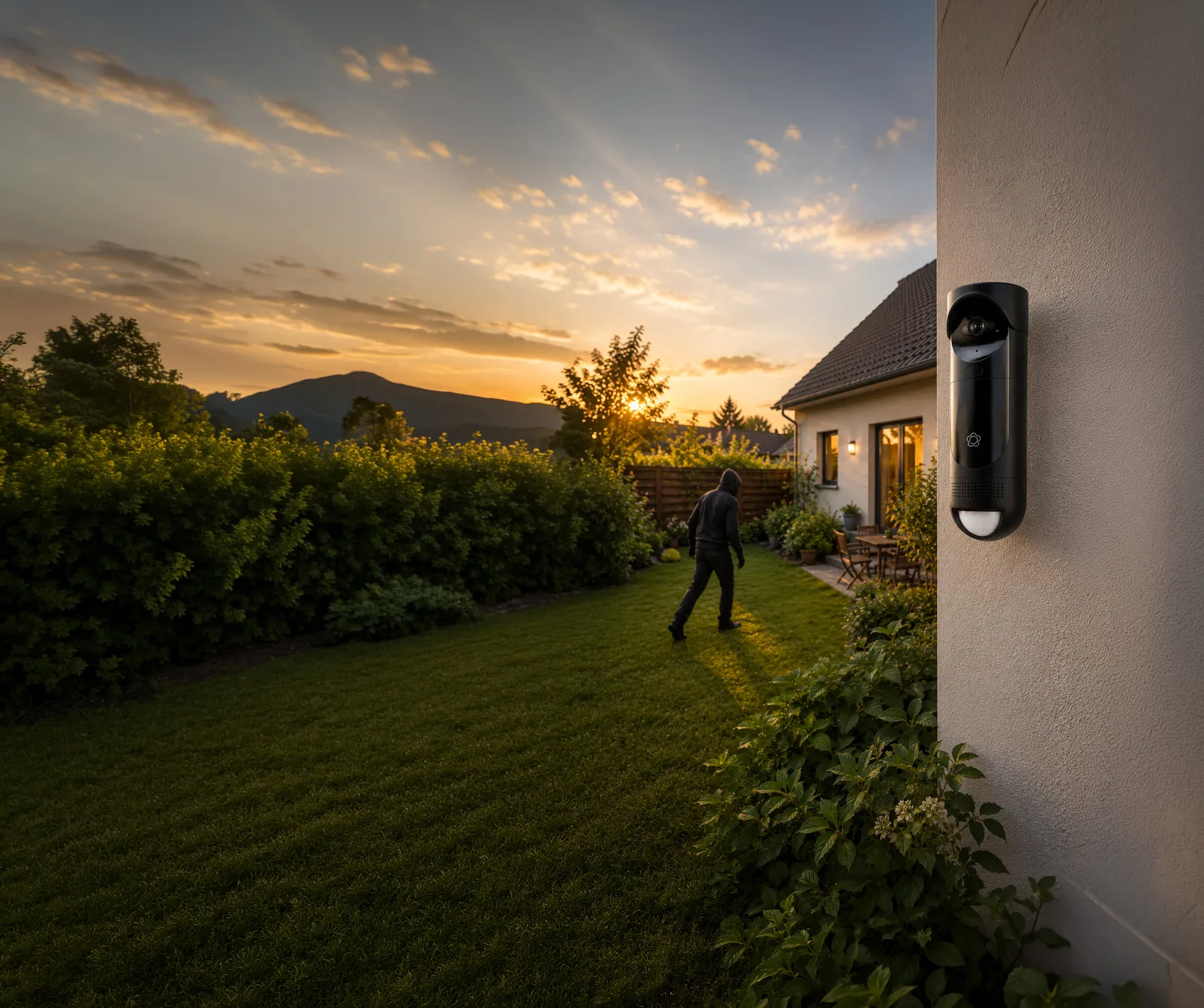
Show protection beginning outside the home — before a suspicious situation becomes an intrusion.
Residential security, realistic homes and gardens, believable human behaviour and clear product presence.
Premium atmosphere · credible environment · immediate story · flexible composition · brand fit.
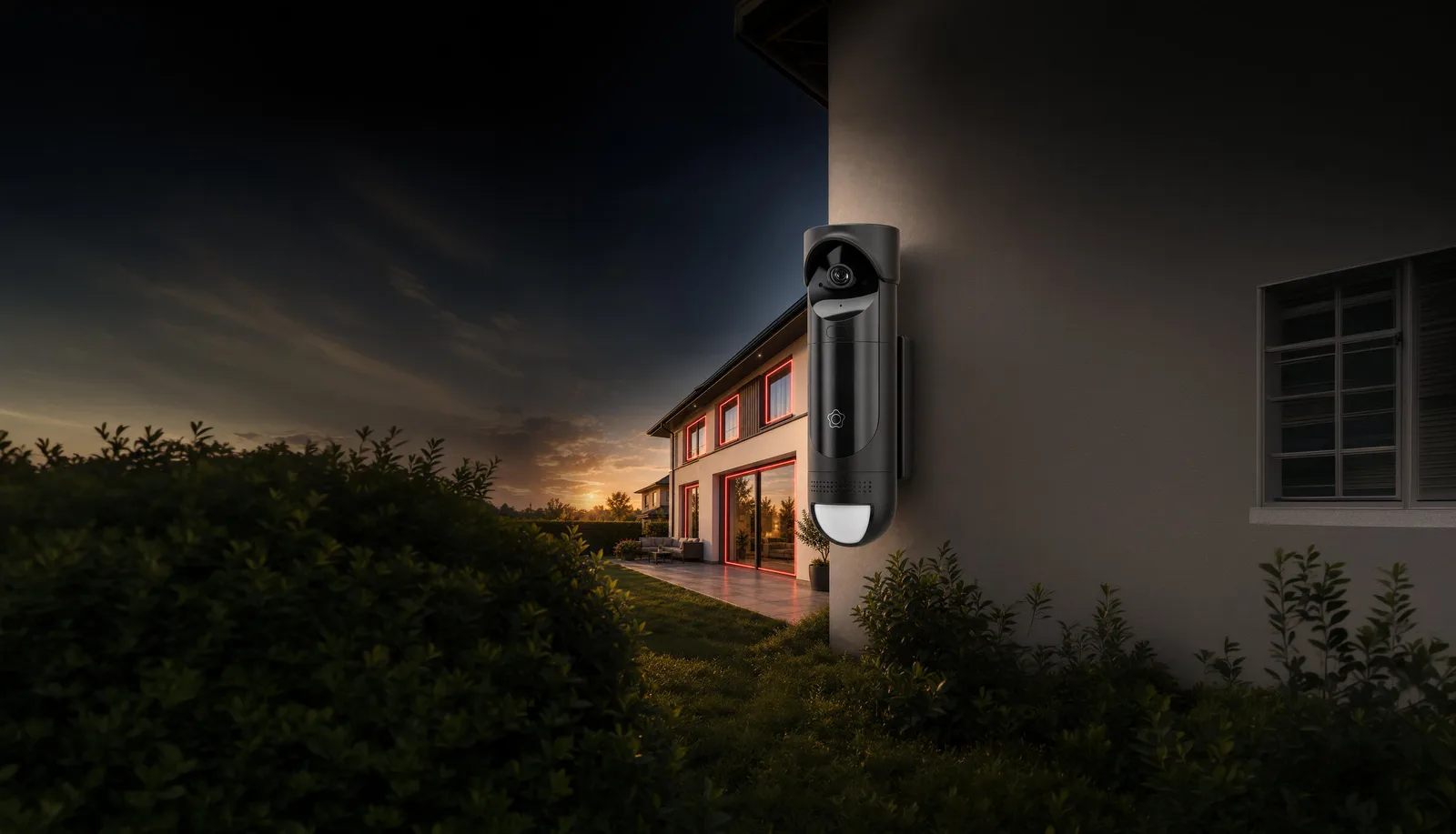
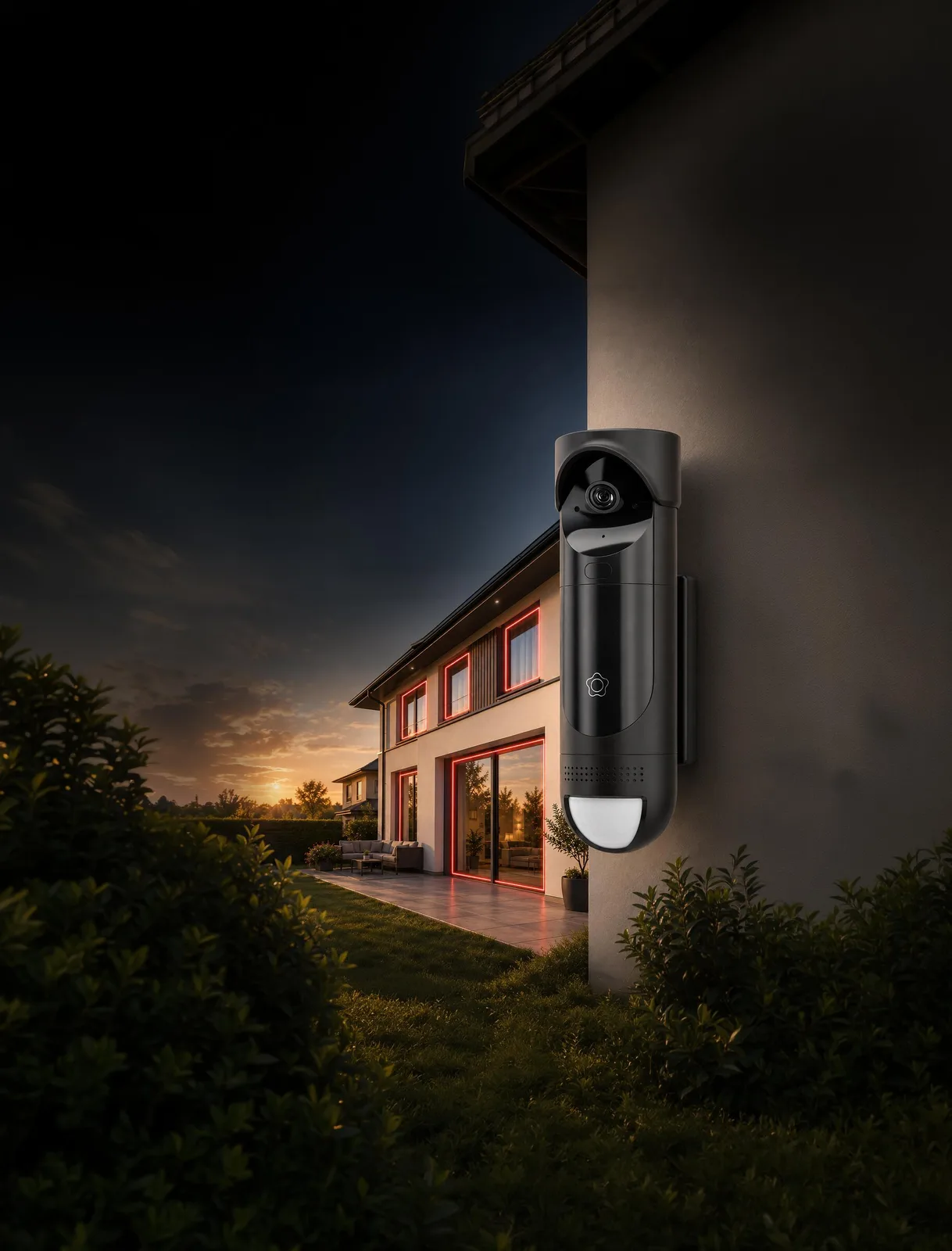
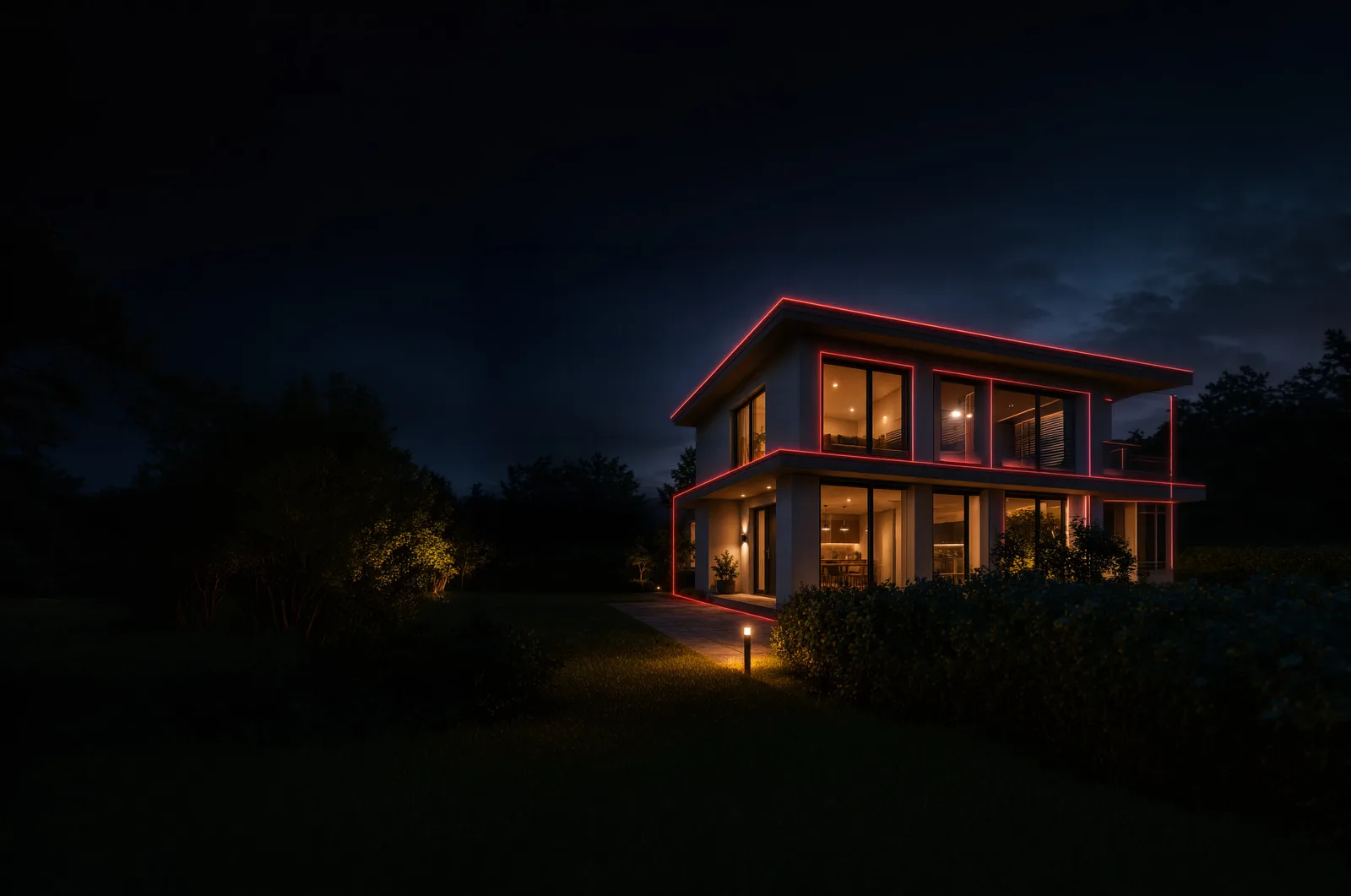
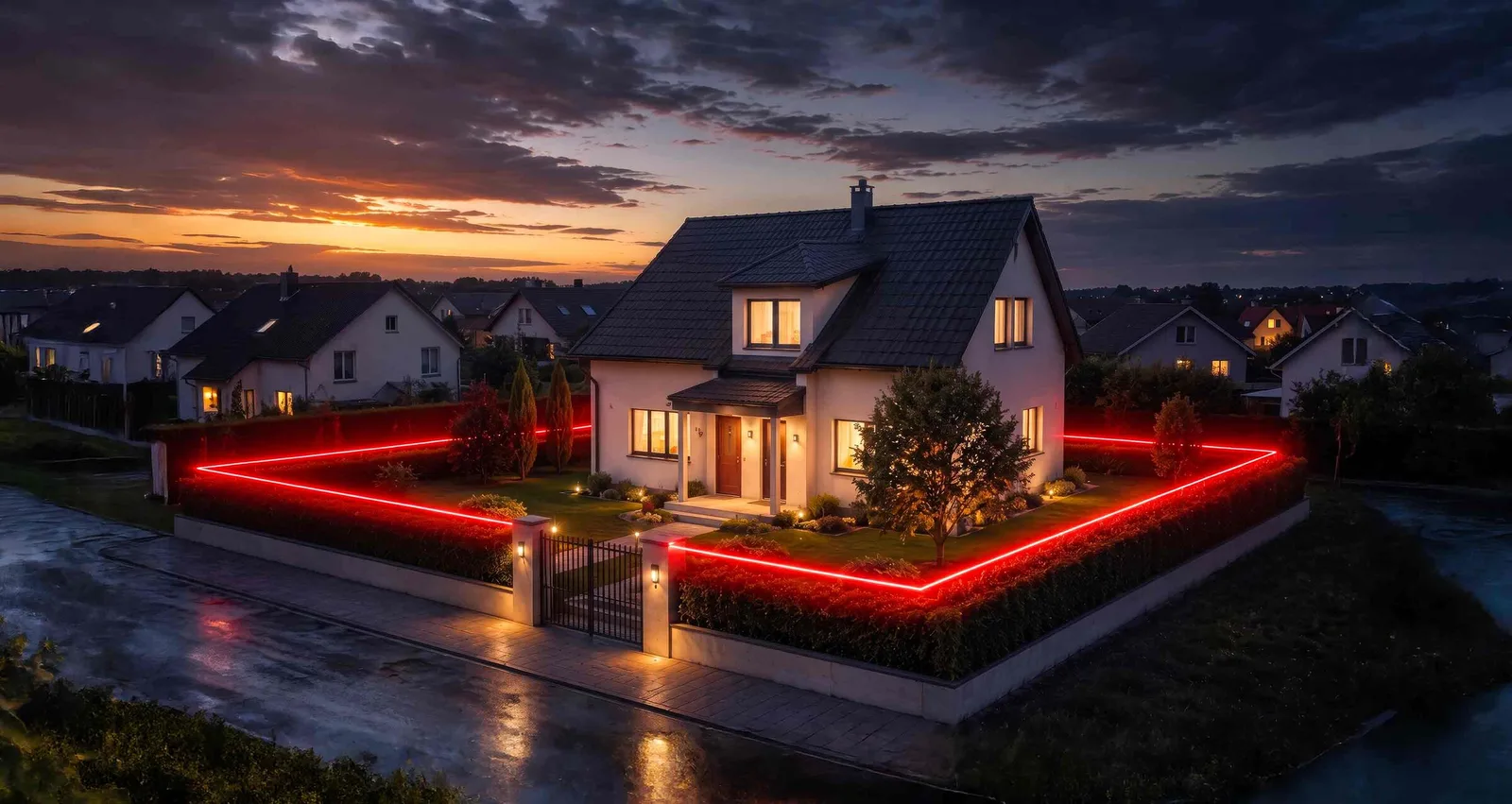
Early visual exploration
02
Generative
exploration.
Midjourney and ChatGPT allow me to open the visual territory quickly: different camera positions, lighting conditions, product emphasis, residential contexts and levels of narrative tension can be evaluated before narrowing the direction.
One brief. Multiple possible visual territories.
03
Rejected
directions.
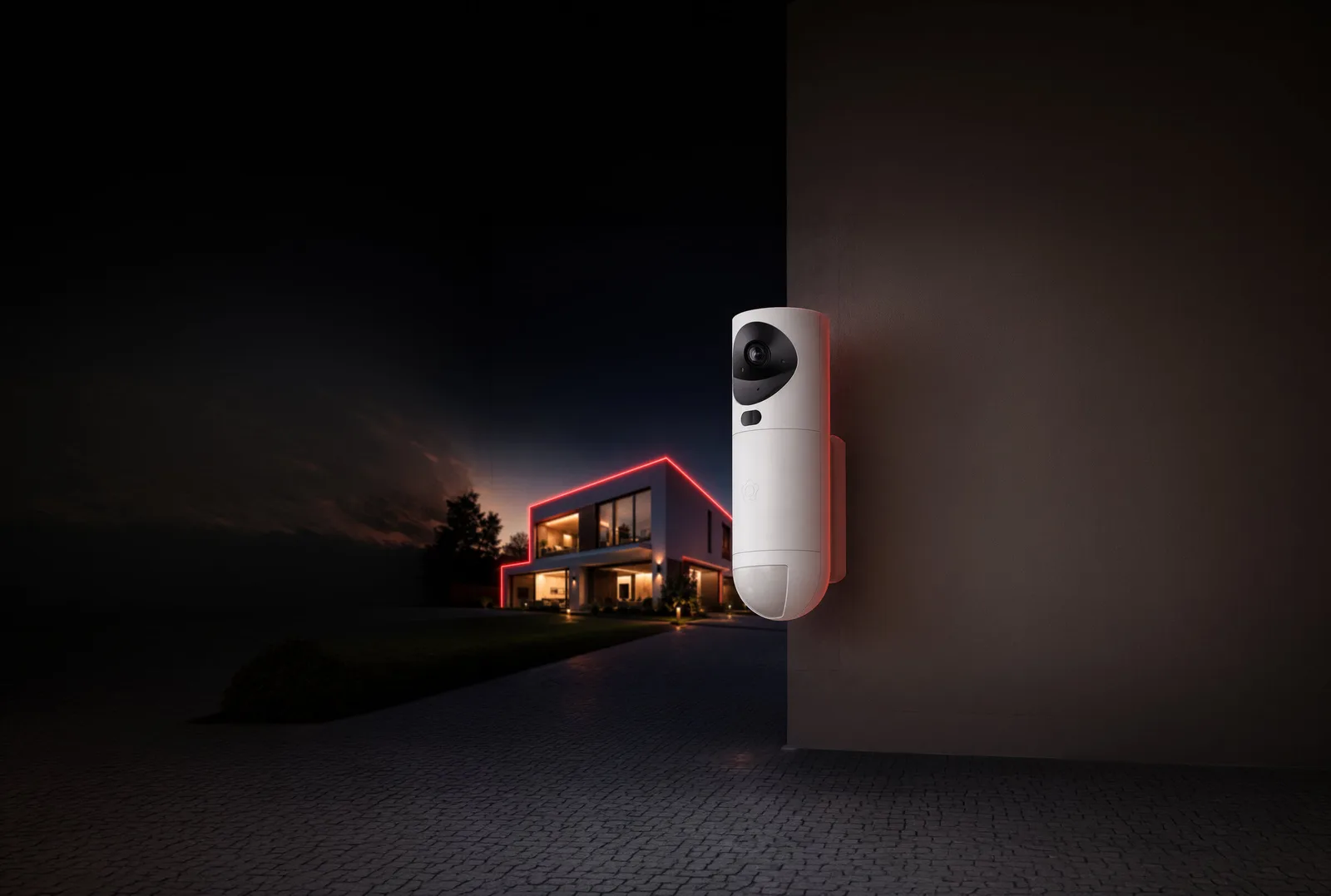
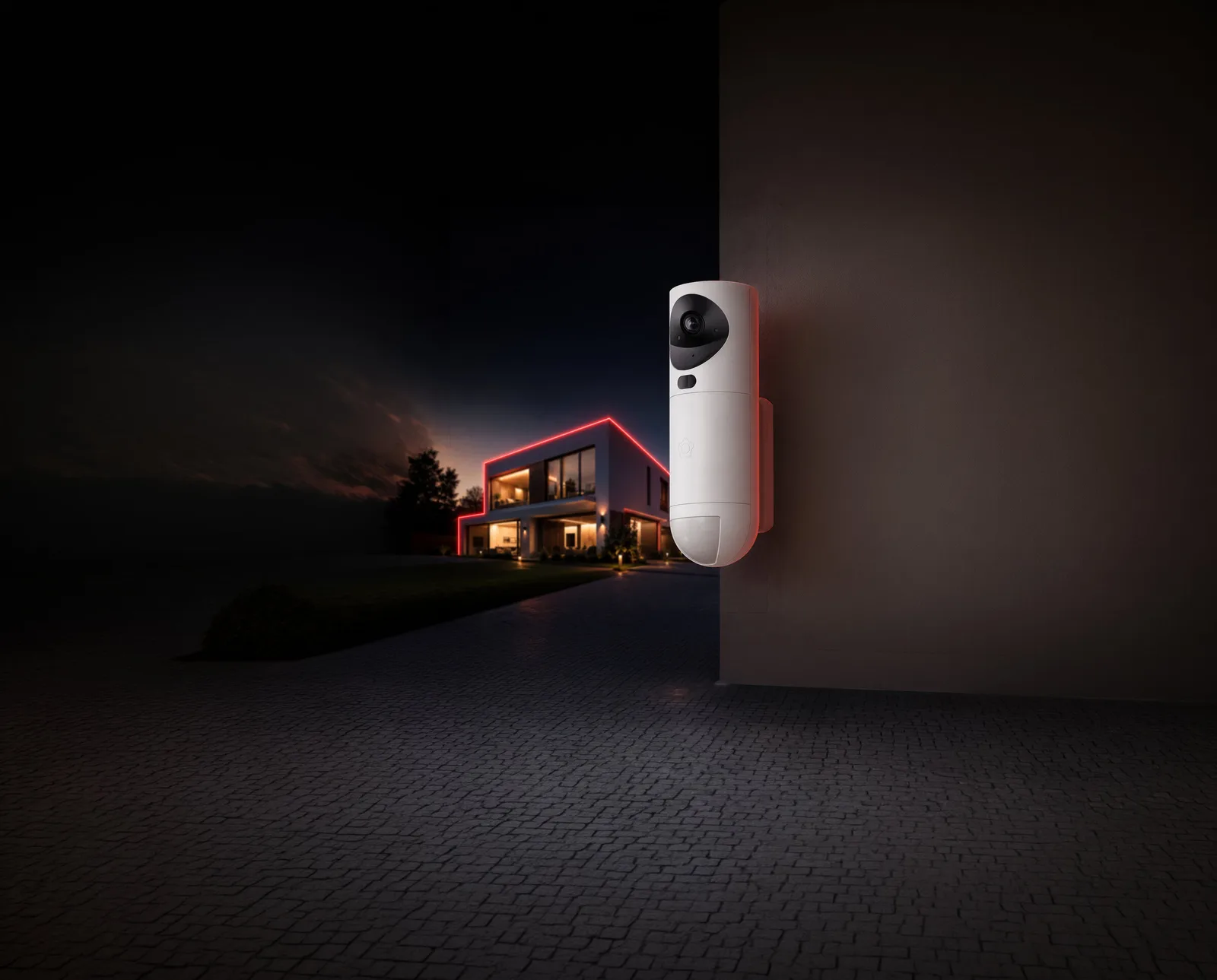
Showing what was rejected matters because AI makes it easy to create volume. The senior skill is deciding what not to use — and being able to explain why.
× RejectedToo product-led.
The security context is clear, but the visual behaves more like a product presentation than a campaign story.
× RejectedNot enough human tension.
Strong atmosphere, but the scene does not communicate the moment of early detection clearly enough.
× RejectedToo architecture-led.
The protection idea reads clearly, but without product or human behaviour the visual remains generic and less useful as a campaign story.
04
Selected
direction.
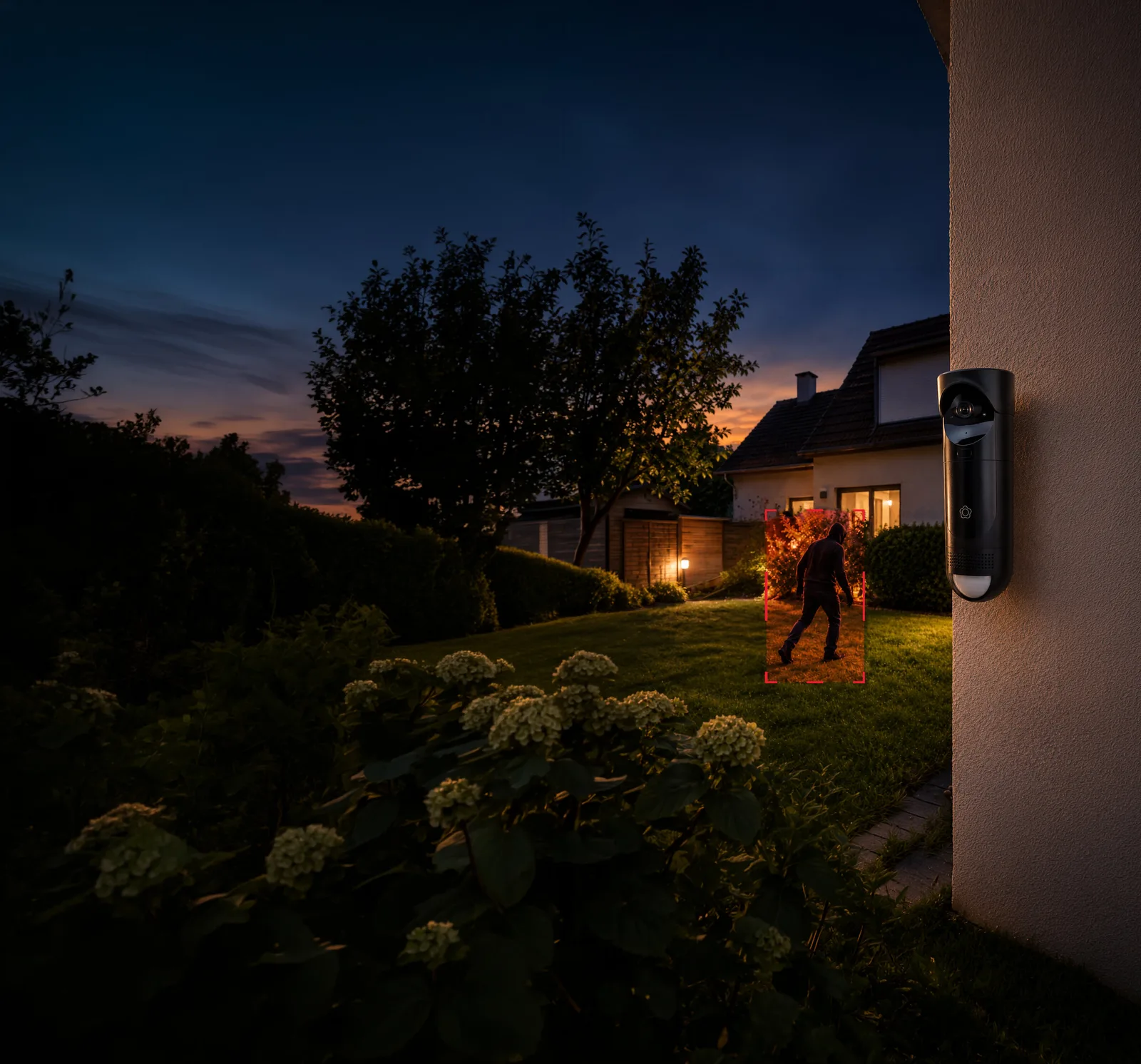
The strongest route adds the missing narrative layer: a believable suspicious action in a realistic residential setting, while keeping the security camera immediately visible and the composition flexible enough for later campaign design.
05
Creative QA &
direction control.
Before a generated visual moves into campaign production, I treat it as source material, not finished artwork. I pressure-test the selected direction against alternative levels of threat and atmosphere, then check the route against practical creative, brand and communication criteria.
- Is the product immediately visible?
- Does the residential context feel credible?
- Is the early-detection benefit understandable without explanation?
- Does the scene feel premium rather than sensational?
- Can the composition support typography and campaign messaging later?
06
Role &
strategic value.
Interpret the brief
Translate the marketing problem into a visual objective.
Define the territory
Set the atmosphere, narrative and visual criteria to explore.
Direct AI exploration
Use Midjourney and ChatGPT to broaden the range of viable starting points.
Select with judgment
Reject attractive outputs that are generic, strategically weak or inconsistent.
Approve the direction
Move forward only when the visual can support a real campaign system.
This approach helped evolve recurring campaign imagery toward a more premium, contemporary and intentional visual language while making early-stage exploration significantly broader.
07
Direction selected
Ready for campaign production.
This stage ends with a selected visual territory ready for campaign development. Layout, typography and channel adaptation would be the next production stage. The OmniMode project below is a separate example of campaign-system design, not a continuation of this Verisure exploration.